
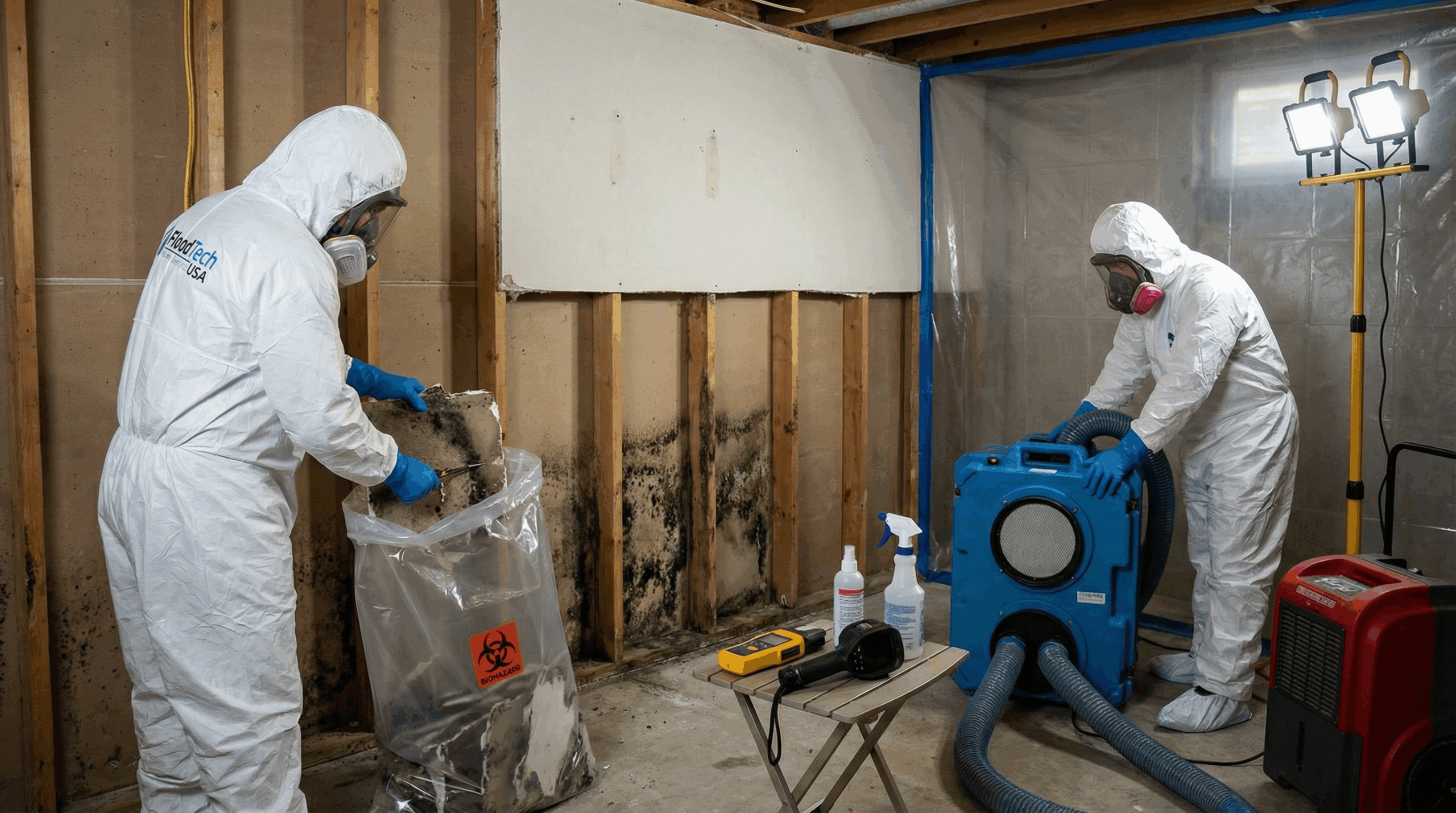
Mold often starts growing long before homeowners realize there’s a problem. A small roof leak, a burst pipe, poor ventilation, or excess humidity can create the perfect environment for mold colonies to spread behind walls, beneath flooring, and inside ceilings. By the time you notice discoloration or a musty smell, mold may already be affecting your home’s structure and indoor air quality.
Many homeowners wonder whether they can clean mold themselves or if they should hire professional mold remediation services. While surface mold on non-porous materials may be cleaned safely in some situations, widespread or hidden mold requires specialized equipment, proper containment, and proven remediation techniques.
If you’re searching for mold remediation services near me in Fairfax, VA, understanding the professional remediation process can help you make informed decisions before the damage becomes more extensive.
In this guide, we’ll explain every stage of the mold remediation process, why professional remediation is safer than DIY cleaning, and how experienced technicians protect both your property and your family’s health.
Why Mold Problems Should Never Be Ignored
Many homeowners assume mold is simply an appearance issue. In reality, mold is a living organism that continues spreading whenever moisture is available.
Ignoring mold can lead to:
- Structural damage to drywall, wood framing, and insulation
- Unpleasant odors throughout the home
- Reduced indoor air quality
- Damage to flooring and ceilings
- Increased repair costs over time
The U.S. Environmental Protection Agency (EPA) recommends addressing moisture issues quickly because mold can begin growing within 24 to 48 hours after water exposure.
Simply painting over mold or spraying bleach on visible areas rarely addresses the underlying problem. Hidden mold often continues spreading behind walls where homeowners cannot see it.
Common Causes of Mold Growth in Fairfax, VA
Fairfax homeowners experience a variety of moisture-related issues throughout the year.
Some of the most common causes include:
Plumbing Leaks
Slow pipe leaks under sinks or inside walls provide continuous moisture that supports mold growth.
Roof Damage
Damaged shingles or flashing can allow rainwater to enter attic spaces without obvious warning signs.
Basement Moisture
Heavy rainfall and poor drainage frequently cause damp basements throughout Northern Virginia.
Flooding
Water damage from storms, broken appliances, or burst pipes creates ideal conditions for mold.
High Indoor Humidity
Bathrooms, laundry rooms, and kitchens often experience elevated humidity levels if ventilation is inadequate.
The Professional Mold Remediation Process Step by Step
Professional remediation follows a structured process designed to remove mold safely while preventing spores from spreading throughout the property.
Step 1: Comprehensive Inspection
Every remediation project begins with a detailed inspection.
Professionals identify:
- Visible mold growth
- Hidden moisture sources
- Areas affected by water damage
- Materials requiring removal
- Extent of contamination
Moisture meters, thermal imaging cameras, and other specialized tools help locate mold hiding behind finished surfaces.
Step 2: Containment
Containment is one of the most important steps in the entire process.
Without proper containment, mold spores can travel into unaffected areas during removal.
Professionals typically install:
- Heavy plastic containment barriers
- Negative air pressure systems
- HEPA air filtration equipment
- Sealed work areas
These precautions protect the rest of your home while remediation is underway.
Step 3: Air Filtration
Mold spores become airborne whenever contaminated materials are disturbed.
Professional remediation teams use commercial-grade HEPA filtration systems that capture microscopic particles from the air.
Continuous air filtration helps:
- Improve indoor air quality
- Reduce airborne spores
- Protect occupants
- Prevent cross-contamination
Step 4: Removal of Contaminated Materials
Not every material can be saved.
Depending on the severity of contamination, technicians may remove:
- Drywall
- Carpet padding
- Insulation
- Ceiling tiles
- Damaged wood
Porous materials often cannot be fully cleaned once mold penetrates deep inside.
Step 5: Cleaning Salvageable Materials
Materials that can be preserved undergo specialized cleaning procedures.
This may include:
- HEPA vacuuming
- Antimicrobial cleaning
- Damp wiping
- Wire brushing on structural wood
- Specialized cleaning agents
Professional mold removal and remediation services focus on physically removing mold—not simply covering or bleaching affected surfaces.
Step 6: Drying the Property
Moisture control is essential.
Industrial equipment such as:
- Air movers
- Commercial dehumidifiers
- Moisture monitoring equipment
help dry the property thoroughly before rebuilding begins.
If moisture remains, mold can return quickly.
Step 7: Restoration
Once remediation is complete, damaged materials are repaired or replaced.
Restoration may include:
- Drywall replacement
- Painting
- Flooring installation
- Trim replacement
- Structural repairs
The goal is returning your home to a safe, healthy condition.
Why Professional Mold Remediation Services Matter
Many online videos suggest homeowners can solve mold problems with household cleaners.
Unfortunately, DIY cleaning rarely removes hidden mold colonies.
Professional remediation offers several important advantages.
Proper Identification
Professionals determine:
- Where mold is growing
- Why it developed
- How far contamination has spread
Treating only visible mold leaves hidden colonies behind.
Safe Removal
Improper removal can spread millions of spores throughout a home.
Professionals use:
- Personal protective equipment
- HEPA filtration
- Containment barriers
- Industry-approved cleaning procedures
These methods reduce exposure while limiting contamination.
Moisture Correction
Removing mold without fixing the moisture source almost guarantees recurrence.
Professionals identify issues such as:
- Pipe leaks
- Roof leaks
- Foundation seepage
- Ventilation problems
- Condensation
Correcting these problems is a key part of long-term success.
Thorough Documentation
Many insurance companies require detailed documentation following water damage or mold remediation.
Professional contractors often provide:
- Inspection reports
- Moisture readings
- Photos
- Scope of work
- Completion documentation
Preventing Mold from Returning
Successful remediation doesn’t end after cleaning.
Homeowners can reduce future mold growth by following several preventive practices.
Control Indoor Humidity
Keep indoor humidity below 50%.
Use:
- Dehumidifiers
- Bathroom exhaust fans
- Kitchen ventilation
- Proper HVAC maintenance
Repair Leaks Promptly
Never ignore:
- Dripping pipes
- Roof leaks
- Window leaks
- Foundation moisture
Even small leaks can create long-term mold problems.
Improve Air Circulation
Good airflow helps moisture evaporate more quickly.
Simple improvements include:
- Ceiling fans
- Opening closet doors occasionally
- Keeping furniture slightly away from exterior walls
- Running exhaust fans after showers
Respond Quickly to Water Damage
Whether caused by storms or plumbing failures, water should be removed immediately.
The Institute of Inspection Cleaning and Restoration Certification (IICRC) recommends rapid drying to reduce secondary damage, including mold growth.
When Should You Call Mold Remediation Experts?
Consider contacting professionals if you notice:
- Persistent musty odors
- Visible mold larger than a small isolated area
- Water damage from flooding
- Mold returning after cleaning
- Discoloration on walls or ceilings
- Health symptoms that worsen indoors
The sooner remediation begins, the easier it is to limit damage and restoration costs.
If you’re looking for reliable mold remediation services near me, working with experienced professionals helps ensure the problem is addressed safely and thoroughly.
For homeowners dealing with water damage or mold concerns, FloodTech USA offers comprehensive mold remediation services in Fairfax, VA. Learn more about our mold remediation services in Fairfax, VA and how our team can help restore your property.
For additional information about preventing mold after water damage, the U.S. Environmental Protection Agency also provides practical homeowner guidance: https://www.epa.gov/mold.
Frequently Asked Questions
1. What do professional mold remediation services include?
Professional mold remediation services typically include inspection, moisture detection, containment, HEPA air filtration, mold removal, cleaning, drying, and restoration. The process also addresses the moisture source to help prevent mold from returning.
2. How do I know if I need mold remediation services near me?
If you notice musty odors, visible mold growth, recent water damage, recurring mold after cleaning, or signs of moisture behind walls or ceilings, it’s time to contact local mold remediation professionals for an inspection.
3. How long do mold removal and remediation services take?
The timeline depends on the size of the affected area and the severity of contamination. Smaller projects may take one to three days, while larger remediation and restoration projects can take a week or longer.
4. Can mold come back after professional remediation?
Mold can return if the underlying moisture problem isn’t corrected. Professional mold remediation services focus on both removing existing mold and identifying the water source to reduce the risk of future growth.
5. Is professional mold remediation better than cleaning mold myself?
Yes. Professional mold remediation services use specialized equipment, containment systems, and HEPA filtration to safely remove mold while preventing spores from spreading throughout the home. DIY cleaning is generally only appropriate for very small, isolated areas and may not address hidden contamination.
Conclusion
Mold problems rarely resolve on their own, and delaying action often leads to more extensive damage and higher repair costs. Understanding the professional remediation process helps homeowners make informed decisions when moisture or mold appears. From detailed inspections and containment to thorough cleaning, drying, and restoration, experienced technicians follow proven methods to protect both your home and your family’s health. If you need dependable professional mold remediation services or mold removal and remediation services in Fairfax, VA, FloodTech USA is ready to help with prompt, thorough solutions tailored to your property’s needs.