
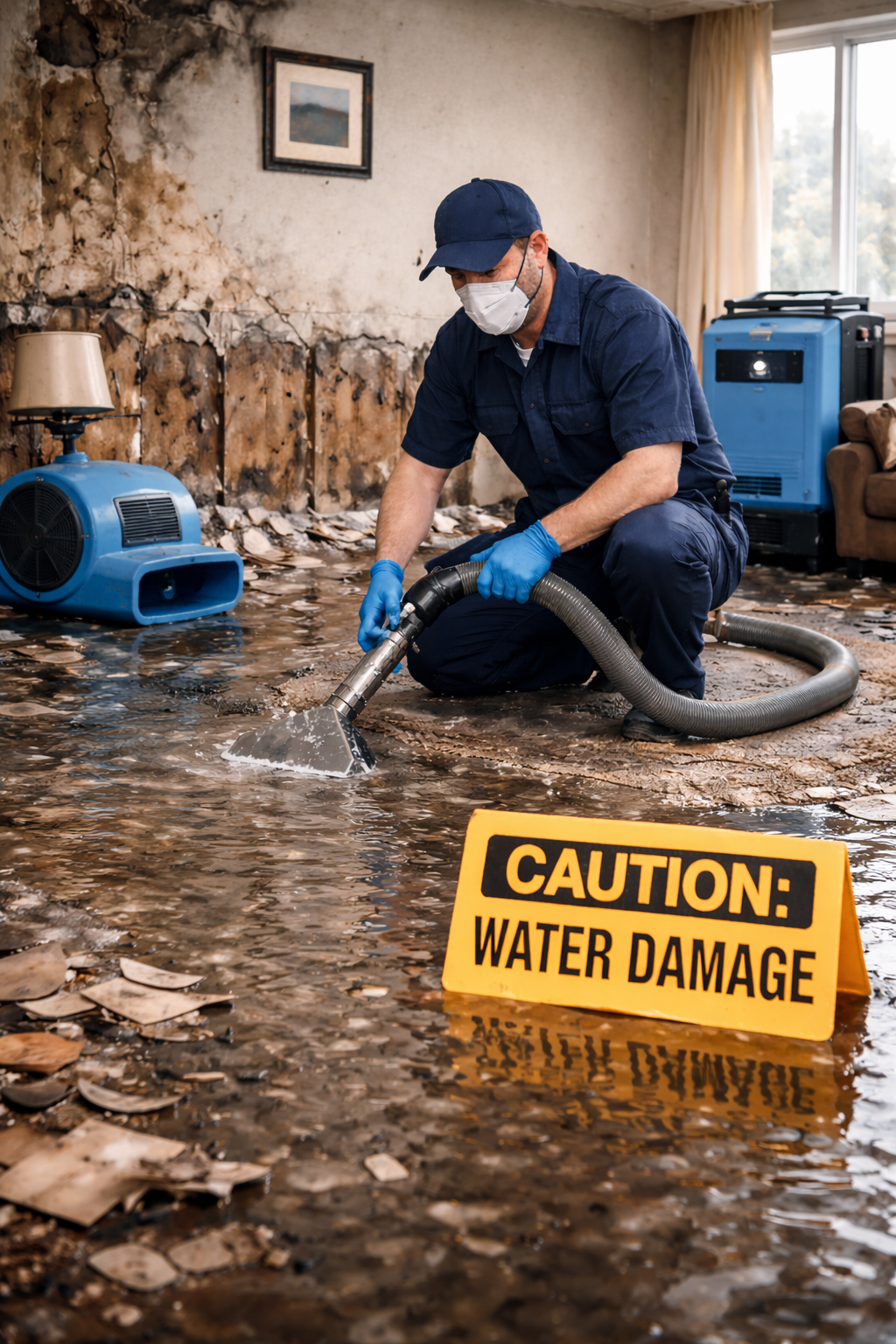
Water damage can happen without warning. A burst pipe, overflowing appliance, heavy rain, or hidden plumbing leak can quickly turn into a costly problem for homeowners and business owners in McLean, VA. When water enters your property, one of the first questions you may ask is whether you should handle the cleanup yourself or call a water damage restoration specialist.
At first glance, DIY cleanup seems like the less expensive option. Renting fans, using towels, and running a wet vacuum may appear sufficient. However, the true cost of water damage often goes far beyond what you can see on the surface. Moisture trapped inside walls, flooring, insulation, and structural materials can lead to mold growth, wood rot, and expensive repairs weeks or months later.
Understanding the water damage restoration process can help you make an informed decision and potentially save thousands of dollars. This guide explains when DIY cleanup works, when professional restoration is necessary, and how choosing the right solution protects both your property and your budget.
Why Water Damage Gets More Expensive Over Time
One of the biggest misconceptions about water damage is that visible water is the only issue. In reality, water spreads rapidly through porous building materials.
Within the first day, moisture can begin affecting:
- Drywall
- Hardwood flooring
- Carpet padding
- Insulation
- Cabinets
- Structural framing
According to the U.S. Environmental Protection Agency (EPA), mold can begin growing within 24 to 48 hours if moisture is not properly removed. This is why fast action is critical.
For McLean homeowners, delaying proper drying can turn a relatively small repair into a major restoration project.
What Does DIY Water Cleanup Usually Include?
Many homeowners attempt to clean water damage using household equipment.
Typical DIY methods include:
- Mopping standing water
- Using towels
- Renting carpet cleaners
- Running box fans
- Opening windows
- Using a shop vacuum
These methods can help with minor spills or small leaks that are cleaned immediately.
However, they often fail to remove hidden moisture trapped underneath flooring or inside walls.
Without moisture meters or thermal imaging equipment, it’s nearly impossible to know whether everything is completely dry.
The Hidden Costs of DIY Cleanup
DIY cleanup may appear affordable initially, but unexpected expenses often arise later.
Incomplete Drying
Even when surfaces appear dry, moisture can remain underneath flooring or behind drywall.
This hidden moisture may cause:
- Mold growth
- Warped hardwood
- Swollen cabinets
- Ceiling stains
- Structural weakening
Repairing these issues usually costs far more than professional drying.
Mold Remediation
A small water leak that isn’t properly dried can quickly become a mold problem.
Mold removal often includes:
- Removing drywall
- Replacing insulation
- Air filtration
- Cleaning framing
- Preventing future contamination
Professional mold remediation frequently costs significantly more than early water extraction.
Damage to Electrical Systems
Water and electricity are a dangerous combination.
DIY cleanup may overlook moisture inside:
- Electrical outlets
- Wiring
- Breaker panels
- Appliances
Professional restoration companies know how to inspect these areas before restoration begins safely.
Insurance Problems
Insurance companies often expect homeowners to take reasonable steps to minimize additional damage.
If improper drying causes secondary damage, some repairs may not be covered.
Hiring a documented water damage restoration service provides detailed moisture readings, photographs, and restoration reports that may assist during the claims process.
What Does a Water Damage Restoration Specialist Do?
A professional water damage restoration specialist follows a structured process designed to restore your property safely and completely.
Step 1: Inspection
The first step involves identifying:
- Water source
- Affected materials
- Moisture levels
- Safety hazards
Professionals use specialized equipment rather than relying on visible signs alone.
Step 2: Water Extraction
Industrial pumps remove standing water much faster than household equipment.
Rapid extraction reduces:
- Material damage
- Mold risk
- Drying time
Step 3: Moisture Detection
Using moisture meters and infrared cameras, technicians locate hidden moisture behind:
- Walls
- Flooring
- Ceilings
- Cabinets
This is one of the most important parts of the water damage restoration process.
Step 4: Structural Drying
Commercial-grade air movers and dehumidifiers dry the property to industry standards.
Unlike residential fans, professional equipment continuously removes moisture from building materials.
Step 5: Cleaning and Sanitizing
Floodwater and plumbing failures may contain contaminants.
Cleaning includes:
- Antimicrobial treatments
- Odor removal
- Surface disinfection
- Air purification when necessary
Step 6: Monitoring
Technicians regularly monitor moisture levels until the property reaches acceptable drying standards.
Only then is the restoration process considered complete.
DIY vs. Professional Restoration: Cost Comparison
While every situation is different, here’s a general comparison.
| DIY Cleanup | Professional Restoration |
| Lower upfront cost | Higher initial investment |
| Limited equipment | Commercial-grade drying equipment |
| Risk of hidden moisture | Complete moisture detection |
| Higher chance of mold | Mold prevention measures |
| Longer drying time | Faster restoration |
| Possible insurance complications | Detailed documentation for claims |
In many cases, professional restoration reduces the total long-term cost by preventing secondary damage.
When DIY Cleanup May Be Enough
DIY cleanup may be appropriate if:
- The spill is small.
- Clean water is involved.
- The affected area is limited.
- Water is removed immediately.
- No building materials became saturated.
Examples include:
- Small sink overflows
- Minor refrigerator leaks
- Spilled water on hard flooring
Even then, thorough drying remains essential.
When You Should Call a Professional Immediately
Contact a water damage restoration specialist if you experience:
- Flooding
- Burst pipes
- Sewage backups
- Ceiling leaks
- Storm damage
- Basement flooding
- Wet drywall
- Standing water covering large areas
These situations require specialized drying equipment that most homeowners simply don’t have.
Why 24-Hour Emergency Response Matters
Water damage doesn’t wait until normal business hours.
A 24-Hour Emergency Response helps reduce damage before it spreads.
Benefits include:
- Faster water removal
- Reduced mold risk
- Lower repair costs
- Less disruption to your home
- Greater chance of salvaging flooring and furniture
Responding quickly is often the difference between minor repairs and major reconstruction.
Why McLean Properties Need Fast Restoration
McLean homes often feature:
- Hardwood flooring
- Finished basements
- Custom cabinetry
- Luxury finishes
- Large living spaces
These materials can be especially vulnerable to moisture.
Because many homes also have finished lower levels, even a small plumbing failure can affect multiple rooms before it is discovered.
Professional restoration minimizes damage to these valuable features.
How to Choose the Right Water Damage Restoration Service
If you’re searching online for water damage restoration services near me or emergency water damage restoration near me, look for a company that offers:
- 24-hour emergency availability
- Certified restoration technicians
- Advanced drying equipment
- Moisture detection technology
- Insurance claim assistance
- Transparent communication
- Experience with residential and commercial properties
Choosing an experienced team helps ensure the job is completed the first time correctly.
Protect Your Home Before Water Damage Happens
While emergencies can’t always be prevented, routine maintenance reduces the risk.
Helpful preventive measures include:
- Inspect plumbing regularly.
- Replace aging water supply lines.
- Clean gutters.
- Inspect your roof annually.
- Install leak detection devices.
- Know where your main water shutoff valve is located.
Preventive maintenance is almost always less expensive than emergency repairs.
Learn More About Water Damage Restoration
For additional guidance on protecting your property after flooding or leaks, the Institute of Inspection Cleaning and Restoration Certification (IICRC) provides valuable information about professional restoration standards.
If you need local assistance, learn more about water damage restoration in McLean, VA from FloodTech USA: https://floodtechusa.com/water-damage-restoration-mclean-va/
Conclusion
Choosing between DIY cleanup and hiring a professional depends on the extent of the damage, but larger water emergencies almost always benefit from expert restoration. While DIY methods may seem less expensive at first, hidden moisture, mold growth, structural damage, and insurance complications can quickly increase overall costs. Acting quickly and following the proper water damage restoration process helps protect your property and reduces long-term expenses. When water damage affects your home or business in McLean, VA, working with experienced professionals provides peace of mind and helps restore your property safely and efficiently.
Frequently Asked Questions
1. What is the water damage restoration process?
The water damage restoration process includes inspection, water extraction, moisture detection, structural drying, cleaning, sanitizing, and ongoing monitoring until the affected materials reach appropriate moisture levels. This systematic approach helps prevent mold growth and additional structural damage.
2. Why is a 24-Hour Emergency Response important for water damage?
Water begins damaging building materials immediately, and mold can develop within 24 to 48 hours. A 24-Hour Emergency Response allows professionals to remove water quickly, begin drying sooner, and reduce the likelihood of expensive secondary damage.
3. When should I hire a water damage restoration specialist?
You should contact a water damage restoration specialist whenever flooding, burst pipes, sewage backups, storm damage, or widespread leaks affect your property. Professional equipment and expertise are essential for safely removing hidden moisture and restoring affected materials.
4. How do I find reliable water damage restoration services near me?
Look for companies that offer emergency response, certified technicians, advanced drying equipment, moisture detection technology, insurance claim assistance, and positive customer reviews. Experience with both residential and commercial properties is also an important factor.
5. Is hiring emergency water damage restoration near me more affordable than DIY cleanup?
For significant water damage, professional restoration is often more cost-effective in the long run. Although the upfront cost may be higher, experts help prevent mold, structural deterioration, and hidden moisture issues that can lead to much larger repair bills later.