
Water damage can happen without warning. A burst pipe, overflowing appliance, roof leak, or heavy rainstorm can leave your home or business with standing water and hidden moisture. While removing visible water is important, the restoration process involves much more than simply drying the area. Without proper treatment, moisture trapped inside walls, flooring, and ceilings can lead to mold growth, structural damage, and expensive repairs.
Professional water damage restoration services help property owners recover quickly while reducing the risk of long-term problems. One of the biggest concerns after water damage is mold, which can begin developing within 24 to 48 hours under the right conditions. That is why restoration professionals often include moisture monitoring, mold prevention, and, when necessary, mold remediation services as part of the recovery process.
This guide explains every stage of a professional water damage restoration service in Falls Church, VA, so you know exactly what to expect if disaster strikes.
Why Immediate Water Damage Restoration Matters
Delaying cleanup allows moisture to spread throughout the property. Even if surfaces appear dry, water may remain inside insulation, drywall, hardwood flooring, or crawl spaces.
Quick restoration helps:
- Prevent structural damage
- Reduce repair costs
- Stop mold growth before it spreads
- Protect furniture and personal belongings
- Improve indoor air quality
- Restore your property faster
According to the U.S. Environmental Protection Agency (EPA), controlling moisture is the most effective way to prevent mold growth after water damage. For additional information, visit the EPA’s mold guide: https://www.epa.gov/mold
Step 1: Emergency Inspection and Damage Assessment
Every professional restoration project begins with a detailed inspection.
Technicians identify:
- Source of the water
- Type of water contamination
- Areas affected
- Hidden moisture behind walls
- Structural concerns
- Potential mold development
Specialized equipment such as moisture meters, infrared cameras, and thermal imaging devices helps locate moisture that cannot be seen with the naked eye.
The inspection also determines whether immediate mold removal and remediation services may be necessary.
Step 2: Stop the Water Source
Before restoration begins, the water source must be eliminated.
This may include:
- Repairing burst pipes
- Shutting off leaking plumbing
- Covering roof damage
- Stopping appliance leaks
- Addressing foundation seepage
Without solving the original problem, water damage will continue to worsen.
Step 3: Water Extraction
Standing water is removed using commercial-grade equipment.
Professional crews use:
- High-powered pumps
- Industrial wet vacuums
- Truck-mounted extraction systems
Fast extraction reduces the amount of moisture absorbed into building materials and significantly decreases drying time.
The sooner this step begins, the less damage your property typically experiences.
Step 4: Drying and Dehumidification
Removing standing water is only part of the process.
Moisture often remains inside:
- Drywall
- Hardwood flooring
- Carpeting
- Cabinets
- Concrete
- Insulation
Industrial air movers and commercial dehumidifiers continuously remove trapped moisture until safe moisture levels are achieved.
Technicians regularly monitor humidity throughout the drying process using professional moisture meters.
Step 5: Cleaning and Sanitizing
Floodwater may introduce bacteria, dirt, odors, and contaminants into your property.
Professional cleaning includes:
- Surface sanitization
- Antimicrobial treatments
- Odor removal
- Air purification
- Cleaning salvageable belongings
This step creates a healthier indoor environment while preventing bacteria and mold from spreading.
Step 6: Mold Inspection and Prevention
One of the most overlooked parts of water damage restoration is mold prevention.
Even after drying, microscopic mold spores may begin growing if moisture remains hidden.
Restoration professionals inspect areas including:
- Behind drywall
- Inside insulation
- Under flooring
- Crawl spaces
- Attics
- HVAC systems
If mold is discovered, professional mold remediation services may be recommended before restoration continues.
Early intervention prevents mold colonies from spreading throughout the property.
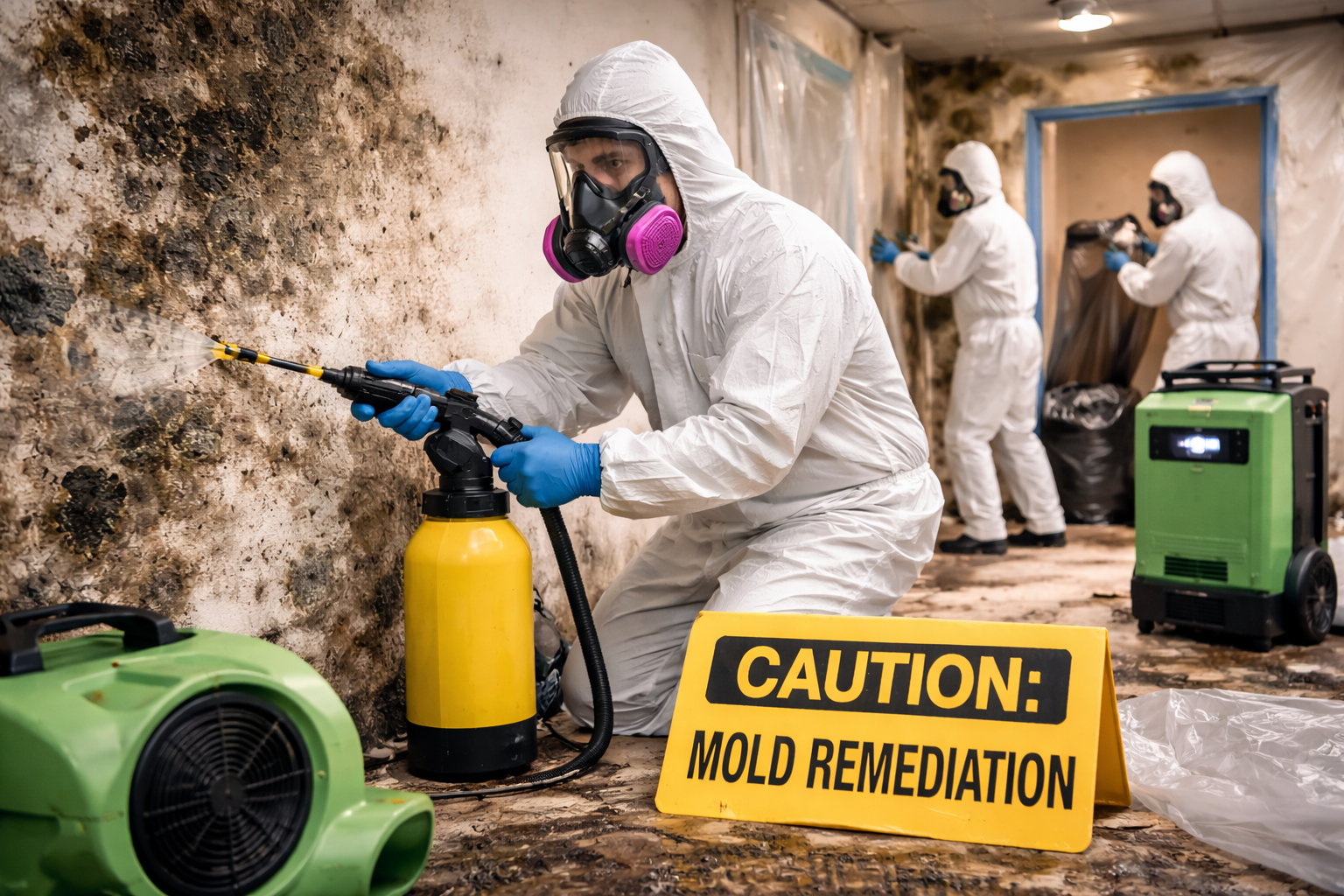
Step 7: Mold Remediation (When Necessary)
Not every water damage project requires mold remediation.
However, if mold has already developed, restoration professionals follow a structured remediation process.
Typical mold remediation services include:
Containment
Plastic barriers and negative air pressure systems prevent spores from spreading into unaffected rooms.
Air Filtration
HEPA filtration systems capture airborne mold spores and improve indoor air quality.
Removal of Contaminated Materials
Severely damaged materials may need removal, including:
- Drywall
- Carpet
- Insulation
- Ceiling tiles
Cleaning Remaining Surfaces
Specialized antimicrobial products eliminate mold from salvageable materials.
Moisture Correction
Professionals identify and correct remaining moisture issues to reduce the risk of future growth.
If you’ve been searching online for mold remediation services near me, choosing a company experienced in both water damage restoration and mold remediation provides a more complete solution.
Step 8: Structural Repairs and Restoration
Once everything is dry, clean, and safe, reconstruction begins.
Restoration may include:
- Drywall replacement
- Flooring installation
- Painting
- Trim repairs
- Cabinet restoration
- Ceiling replacement
The goal is returning the property to its pre-loss condition as efficiently as possible.
How Professionals Detect Hidden Moisture
Visible water tells only part of the story.
Professional restoration teams use advanced equipment including:
- Thermal imaging cameras
- Moisture meters
- Hygrometers
- Infrared scanning
- Digital humidity monitoring
These tools help identify hidden moisture before it causes expensive structural damage or mold growth.
Why DIY Water Cleanup Often Falls Short
Many homeowners attempt to dry water damage using fans or household dehumidifiers.
Unfortunately, this often leaves moisture trapped behind finished surfaces.
DIY cleanup can lead to:
- Hidden mold growth
- Warped flooring
- Structural deterioration
- Persistent odors
- Recurring moisture problems
Professional restoration equipment removes moisture much more effectively than residential equipment.
Signs Mold May Already Be Growing
After water damage, watch for:
- Musty odors
- Dark stains on walls
- Bubbling paint
- Soft drywall
- Allergy symptoms indoors
- Visible mold spots
If you notice these warning signs, professional inspection should not be delayed.
Choosing the Right Restoration Company in Falls Church, VA
When comparing restoration providers, look for:
- Emergency response availability
- Water damage expertise
- Mold remediation capabilities
- Advanced drying equipment
- Licensed and trained technicians
- Clear communication
- Detailed moisture monitoring
Working with one company that offers both restoration and mold removal and remediation services simplifies the recovery process.
For more information about professional restoration solutions, visit FloodTech USA’s Falls Church service page: https://floodtechusa.com/water-damage-restoration-falls-church-va/
You may also find it helpful to read this related guide: https://floodtechusa.com/blog/
Frequently Asked Questions
How soon should water damage restoration begin?
Restoration should begin as quickly as possible, ideally within the first 24 hours. Prompt action minimizes structural damage, reduces drying time, and significantly lowers the risk of mold development.
When are mold remediation services necessary?
Mold remediation becomes necessary when mold growth is already present or when moisture has remained inside the property long enough for spores to develop. A professional inspection determines whether remediation is needed.
How long does a professional water damage restoration service take?
Every project is different. Minor water damage may take several days, while larger losses involving structural repairs or mold remediation can require one to several weeks.
Should I search for mold remediation services near me after every flood?
Not always. If the property was dried quickly and moisture levels returned to normal, mold may never develop. However, if water remained for more than a day or two, or you notice musty odors, a mold inspection is recommended.
What is included in professional mold removal and remediation services?
Professional mold remediation generally includes inspection, containment, HEPA air filtration, removal of contaminated materials, antimicrobial cleaning, moisture correction, and final verification that affected areas have been properly treated.
Restore Your Property with Confidence
Water damage is stressful, but acting quickly can prevent much larger problems. Professional restoration follows a proven process that includes inspection, water extraction, structural drying, cleaning, moisture monitoring, and, when needed, comprehensive mold remediation. By addressing both visible damage and hidden moisture, property owners can reduce repair costs and protect the long-term health of their homes or businesses. If you need reliable water damage restoration or professional mold remediation services in Falls Church, VA, FloodTech USA has the experience, equipment, and rapid response to help restore your property safely and efficiently.